Introduction
TIDAS (TIangong DAta System) is an open data structure and set of tool rules for LCA data. It stores processes, flows, units, sources, and their links in a shared way so teams and software can check, convert, and exchange data more easily.
Think of TIDAS as a common way to fill in and hand over LCA data. It helps organize and check files, but it does not replace LCA decisions about the study goal, functional unit, system boundary, allocation, data quality, or professional review.
New to these concepts? Start with terms and abbreviations, then use the three parts below to understand TIDAS.
🧱 What TIDAS contains
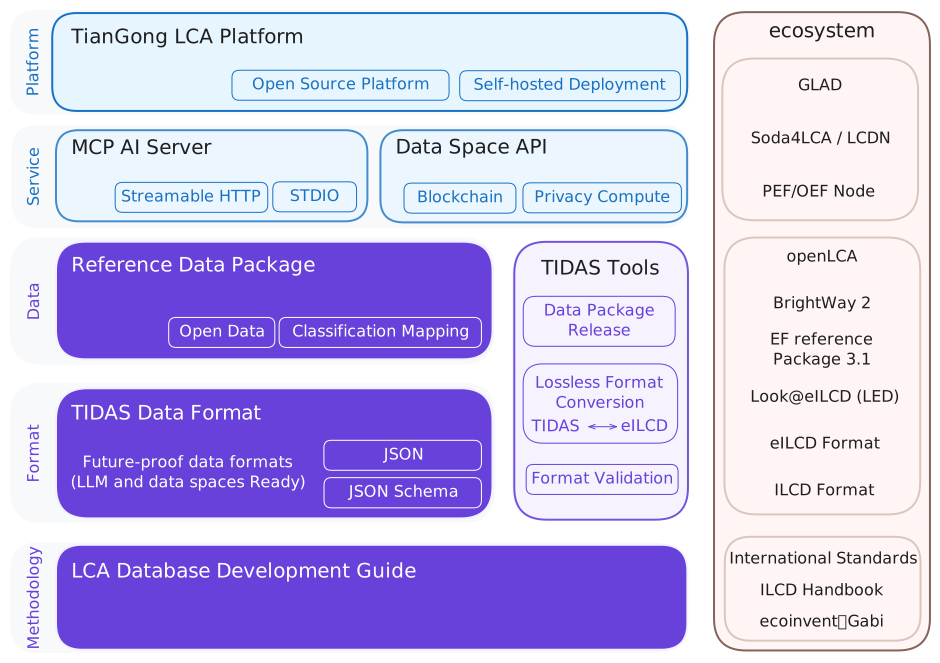
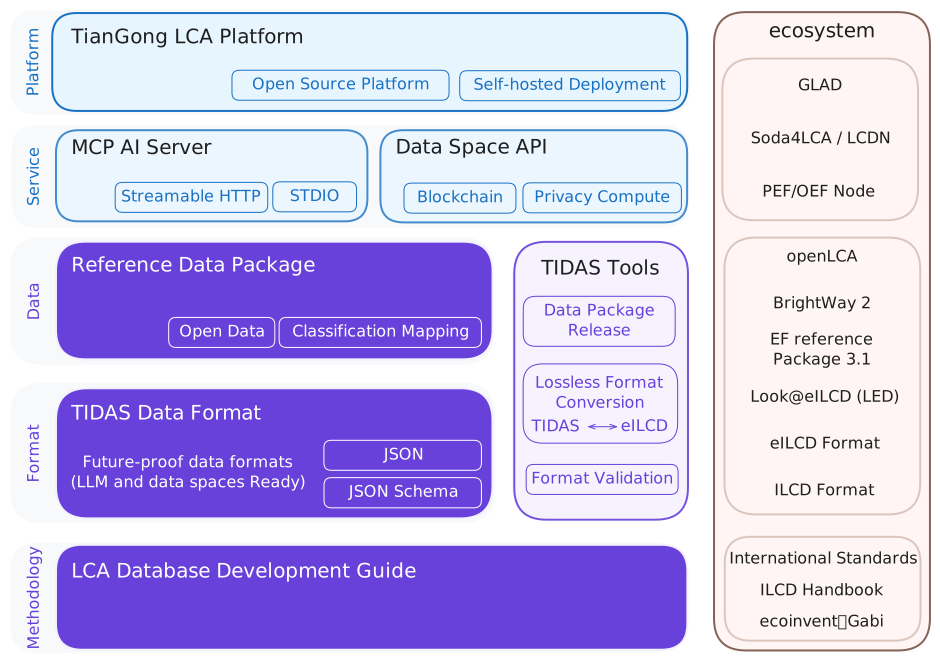
TIDAS architecture consists of three components:
📖 LCA data-work requirements (Methodology)
- LCA/Carbon Footprint Database Construction Guidelines Describes the method, quality, and review information needed when building and maintaining LCA databases, with reference to relevant ISO 14040/44, ILCD Handbook, and ecoinvent practices.
🧾 Data-entry and exchange structure (Format)
- TIDAS Data Structure Stores data as JSON and uses JSON Schema to check required fields, data types, allowed values, and references.
📦 Reference data (Data)
- Reference Data Package Provides reusable classifications, units, and base data so different data sets can use consistent names and identifiers.
🛠 Auxiliary Tools
TIDAS tools are command-line programs that run in a computer terminal to check files, convert supported formats, and export data packages.
-
🧪
validate: checks file structure, required fields, and links between files -
🔄
convert: converts TIDAS and eILCD data where the implemented rules support it -
📤
export: packages data that has passed the required checks as a ZIP file for delivery or archiving
👉 See full tool documentation: TIDAS Toolkit
Advanced: connect TIDAS to other systems
If you only want to save, check, and exchange LCA data, you can skip this section. These pages are for teams that need to connect TIDAS to company systems or development tools:
-
🔐 Control who can view or change data: explains access permissions for work involving several people or organisations.
-
🧠 Analyse together without directly sharing source data: explains privacy-preserving options whose technical implementation includes secure multi-party computation and federated analytics.
-
🔗 Record and verify data changes between parties: explains a blockchain-based option and the situations for which it is intended.
-
🤖 Let AI tools read and assist with TIDAS data: explains the Model Context Protocol (MCP) connection and the data tasks it can assist with.
🌐 Enterprise-level Software: TianGong LCA Platform
- TianGong Platform uses data organized in the TIDAS structure for LCA modelling, calculation, and collaboration; the platform documentation defines the current features and operational boundary.
📂 Advanced use cases
-
🔗 TIDAS + AntChain: Builds enterprise-level blockchain light node verification framework
-
🔧 TIDAS + Haike Data: Supports dual-channel integration via TIDAS and API for model interaction and data review
🤝 Community Participation
-
💼 Contact: 📧 contact@tiangong.earth
📌 Quick Reading Suggestions Recommended order to understand TIDAS architecture:
- Terms and abbreviations
- Methodology Guidelines
- Data Structure Format
- Reference Data Package
- Tool Module
- If you are responsible for connecting systems, continue to advanced integrations